Traditional Bengali Saree Draping: A Visual Guide to the Anchol
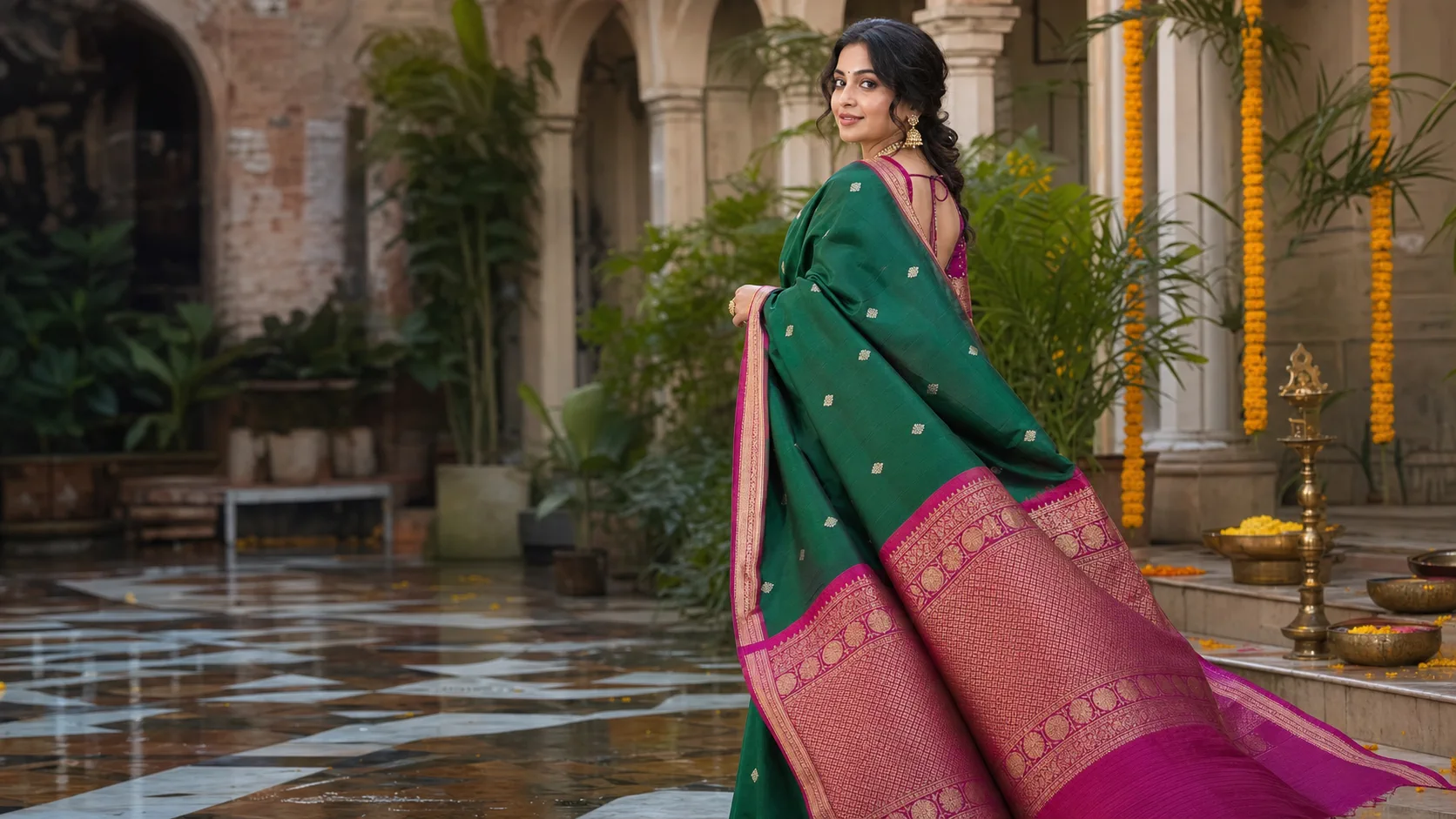
বাঙালি শাড়ি পরার ভঙ্গি ও আঁচলের ভাষা
Explore the traditional Bengali saree draping style, from broad front pleats to the expressive anchol, with practical styling and safety notes.
What gives the Bengali drape its character
The Bengali drape is remembered for breadth rather than tight compression. Broad pleats create a measured front, while the anchol remains visible and expressive. The result can feel ceremonial without requiring an elaborate blouse or heavy accessories.
Historical descriptions record several variations rather than one frozen formula. That matters: family habits, saree length, fabric behaviour and the occasion can all change how the anchol is carried.
Begin with the saree, not the pose
Check the saree length, width and pallu orientation before you start. A crisp cotton will hold broad folds differently from a fluid, smooth fabric. Use a secure petticoat or other appropriate base and comfortable footwear while practising.
Identify the inner end, lower border and pallu. Keeping those areas oriented correctly prevents the border from turning inward and ensures the pallu design appears the right way up.
Build broad, balanced front folds
Wrap the inner portion around the waist and secure it evenly. Form broad front folds that travel from side to side rather than creating a very narrow stack. Adjust the hem before tightening so the lower border stays level.
The historical guide describes alternating broad pleats for the Bengali style. In practice, the precise number should serve comfort and fabric width, not become a rigid rule.
Let the anchol tell the story
Carry the pallu over the shoulder so its decorative section can be read. One variation brings it forward again; another allows it to remain broad across the torso. A discreet pin is safer than relying on a decorative key ring or weight.
Keep the anchol clear of open flames, moving wheels and crowded doorways. Tradition feels most graceful when the wearer can move confidently.
Style without hiding the saree
A round bindi, restrained jewellery and flowers in the hair can complement the drape, but none is compulsory. Let the pallu and border remain visible instead of covering them with oversized bags or layered necklaces.
For photographs, capture one front view, one side view and one open-pallu frame. Those three perspectives communicate the drape more honestly than a sequence of tightly cropped portraits.
Does a Bengali saree drape require a specific fabric?
No. Different fabrics can be styled in a Bengali manner, though their weight and structure change how the pleats and anchol fall.
Should the pallu be pinned?
A discreet pin can improve security. Place it carefully so it does not damage delicate threads or distort the border.