A Beginner’s Guide to Bengali Saree Style and Storytelling
বাংলার শাড়ি ও পরার ধরন
Explore Bengali saree style through drape, borders, pallus, colour, jewellery and storytelling, with practical ideas for modern wardrobes.
Let the textile lead
Bengali saree style is not one fixed outfit. It is a conversation between textile, drape, occasion and the person wearing it. White-and-red ceremonial combinations may be instantly recognisable, but Bengal’s saree vocabulary also includes cottons, silks, narrative pallus, woven borders and expressive everyday colour.
Begin by observing the saree. Is the border the main feature? Does the pallu carry figures, florals or geometry? Is the body quiet or densely patterned? Styling becomes easier when you decide which element deserves attention.
A story-rich pallu can be displayed across the shoulder with fewer folds. A strong border may look best with clean front pleats. A minimal saree gives the blouse and jewellery more room to speak.
The appeal of red and ivory
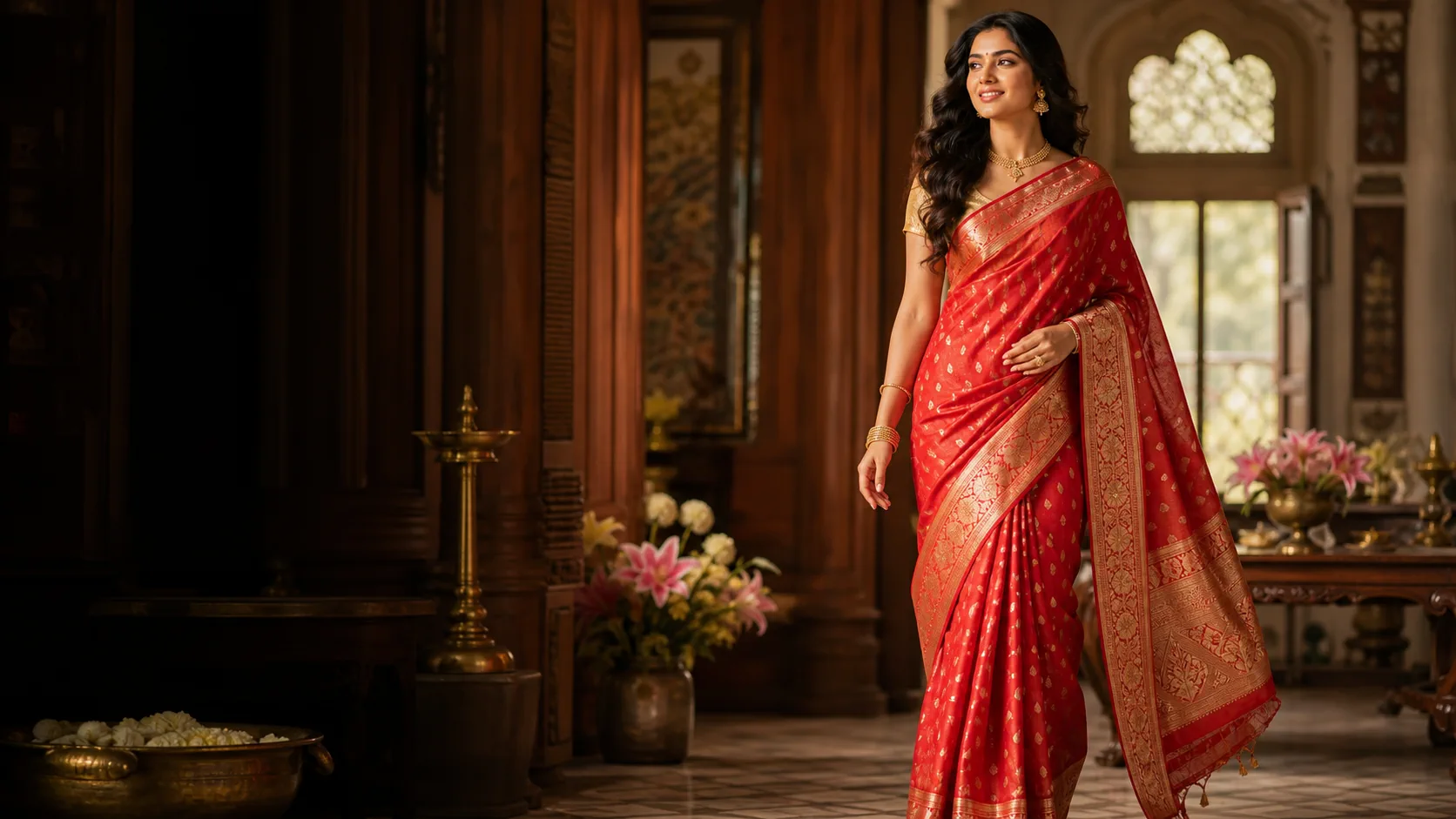
Ivory or white with red is closely associated with Bengali celebrations and ritual settings. The contrast is clear, photographic and emotionally familiar. Modern interpretations can vary the red from vermilion to brick, wine or rust, and the light field from bright white to cream or natural beige.
Beyond the familiar palette
Mustard, green, indigo, coral, slate blue and earthy brown all belong naturally in a Bengali-inspired wardrobe. Birds, leaves, temple-like geometry, florals and narrative scenes can carry regional feeling without requiring a single prescribed colour combination.
Draping choices
The traditional Bengali-inspired drape is known for a broad, expressive pallu and a distinctive silhouette. A contemporary nivi drape can still feel deeply Bengali when the saree, jewellery and styling carry the story.
If you are learning, practise before the event. The best drape is one you can move in confidently. Pins can secure the shoulder and pleats, but avoid piercing delicate areas repeatedly.
Blouse ideas
A classic blouse in red, black, cream or a colour lifted from the border is versatile. Three-quarter sleeves can create a traditional line; a clean sleeveless or high-neck blouse can make the same saree feel contemporary. Fit and comfort matter more than novelty.
Jewellery and finishing details
Gold-toned jewellery adds warmth to red, mustard and green. Silver-toned or oxidised pieces can complement indigo, black, slate and earthy cottons. A bindi, flowers or a small potli may complete the mood, but none is compulsory.
Wearing a story, not a costume
Tradition remains alive when it is worn with understanding and ease. Choose the elements that connect with your occasion and personal history rather than assembling every visual marker at once.
Discover sarees with expressive borders and anchols at Anchol Katha, where the pallu is treated as more than an ending—it is where the story gathers.
Must a Bengali saree be white and red?
No. White and red are culturally recognisable, but Bengali saree traditions and contemporary wardrobes include a much wider range of colours and textiles.
Can I use a regular nivi drape for a Bengali look?
Yes. The saree, pallu presentation, blouse and accessories can create a Bengali sensibility even with a familiar drape.
What jewellery works with a Bengali saree?
Choose jewellery according to the saree’s colour, textile and occasion. Gold-toned, silver-toned, terracotta and restrained contemporary pieces can all work.