The Language of the Anchal: Gesture, Work and the Bengali Drape
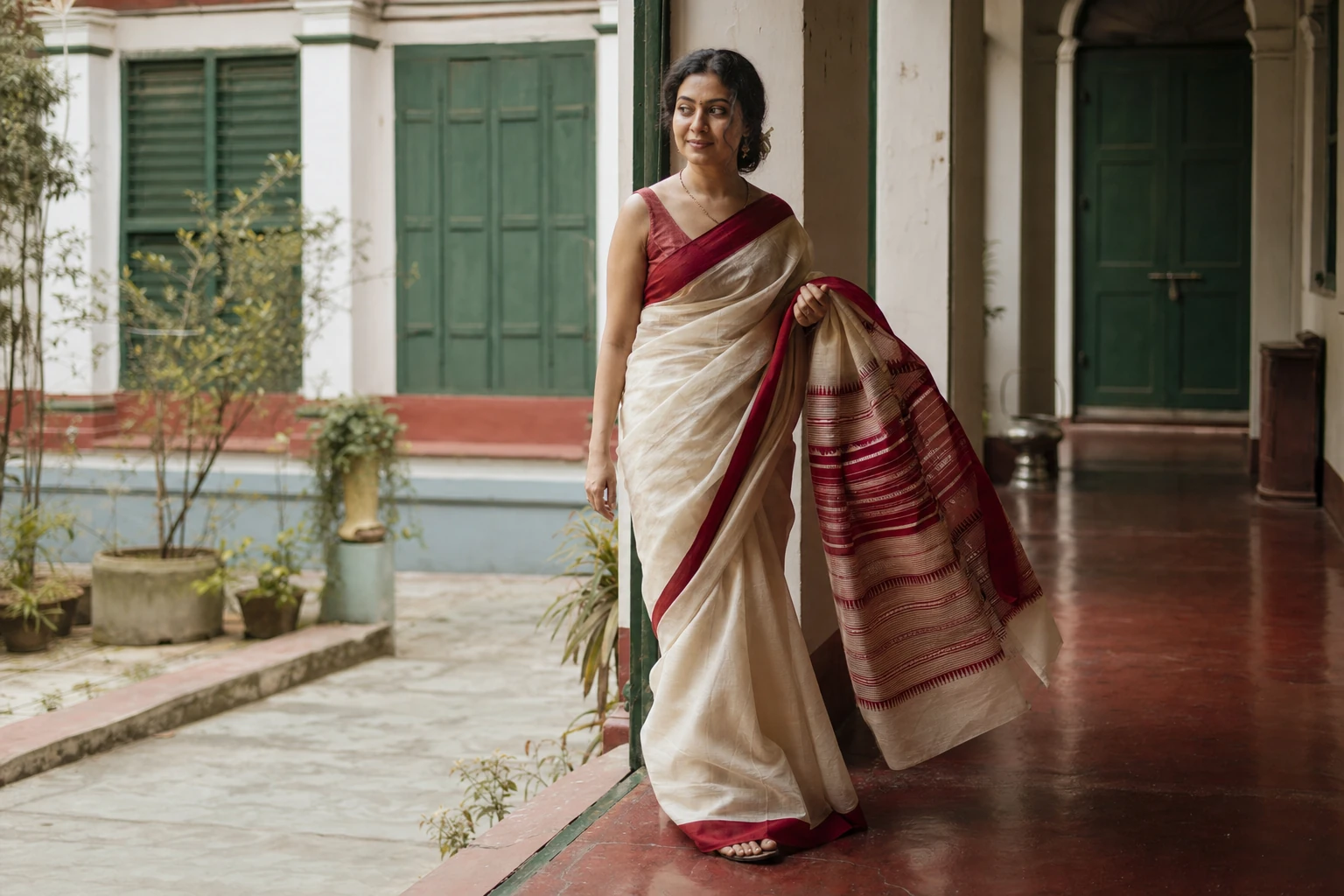
আঁচলের ভাষা: ভঙ্গি, কাজ ও বাঙালি শাড়ি
Explore the Bengali saree anchal as a practical, expressive part of the drape that moves naturally through work, ritual and celebration.
More than the end of the saree
In textile anatomy, the pallu is the terminal section that often differs from the saree body. In Bengali speech, the word anchal carries additional warmth. It can suggest shelter, care, movement and the familiar end of the cloth held in a woman's hand.
That double meaning sits at the heart of Anchol Katha: the anchal is visible design, but it is also where stories gather.
A drape shaped by movement
Traditional Bengali draping is often recognised through broad front pleats and an anchal arranged with a generous, visible fall. There is no single version followed by every wearer. Family custom, saree length, body, occasion and personal comfort all influence the result.
The drape comes alive through use. The anchal may be moved away from the stove, drawn forward in a moment of formality, gathered over the arm or allowed to fall freely during a celebration.
Objects and gestures
Popular images of Bengali draping sometimes include keys attached near the waist or an anchal brought over the opposite shoulder. These details can be evocative, but they should not turn a living style into a checklist.
The more interesting question is how the drape serves the wearer. Where is the weight carried? How much of the border remains visible? Can the anchal move without pulling the pleats? A successful drape is a conversation between design and body.
Learning without performance pressure
Someone trying the Bengali style for the first time may need more than one attempt. Begin with a saree whose body and border are easy to distinguish. Form secure base pleats, decide the desired anchal length, and pin discreetly while practising.
There is no prize for avoiding every pin or completing the drape quickly. Tradition survives through use, and use includes learning.
An anchal for the present
Contemporary wearers may pair the drape with an unexpected blouse, lighter jewellery or comfortable shoes. These choices do not erase its roots; they show that a regional style can remain recognisable while responding to a different day.
The anchal has always moved. Its language is not preserved by forcing it to stand still, but by letting each wearer understand its balance and make it her own.
Is there only one authentic Bengali saree drape?
No. Recognisable conventions exist, but household practice, occasion and individual preference create meaningful variations.
What should a beginner focus on first?
Secure base pleats, a comfortable anchal length and freedom of movement matter more than reproducing every decorative gesture.