Passing the Saree On: How Everyday Cloth Becomes an Heirloom
শাড়ি উত্তরাধিকার: রোজকার কাপড় কীভাবে স্মৃতি হয়ে ওঠে
Learn how a saree heirloom grows through documentation, careful use and honest repair, carrying family design and memory into the future.
An heirloom is made over time
We often imagine an heirloom as something rare, formal and expensive. Many beloved sarees begin more quietly. They are bought with a first salary, worn to a family celebration, borrowed by a sister, repaired by a mother and remembered by a child.
Time gives the cloth a second kind of value. The saree is no longer only an object chosen from a shop. It becomes evidence of relationships.
Keep facts beside feelings
Memory can fade or change, so record what is known while people can still tell you. Note the original owner, approximate year, place of purchase, confirmed material, known maker or seller and significant occasions.
Separate fact from family legend without dismissing either. A remembered place of purchase is a useful fact. The saree that always brought good luck is a different kind of truth, worth preserving in its own words.
Photograph the full design
Take clear images of the entire body, both borders, pallu, close details, repairs and labels. Use even light and avoid filters that change colour. These photographs help future family members understand what may later become too fragile to open fully.
They also protect against an incomplete memory of the design. The pallu should not be confused with the body, and a repeated motif should not be assumed where the original section is unseen.
Repair with honesty
Good repair supports the cloth without pretending that age never happened. Consult someone experienced with the textile before trimming, lining or reworking a valuable saree. Keep removed labels and document major interventions.
If the saree can no longer be worn safely, preservation may take another form: a carefully supported display, a protected textile fragment or a complete photographic record.
Give the next wearer the story
When passing on a saree, include its note. Explain its delicate areas and care needs. Share a photograph of the earlier wearer if the family is comfortable doing so.
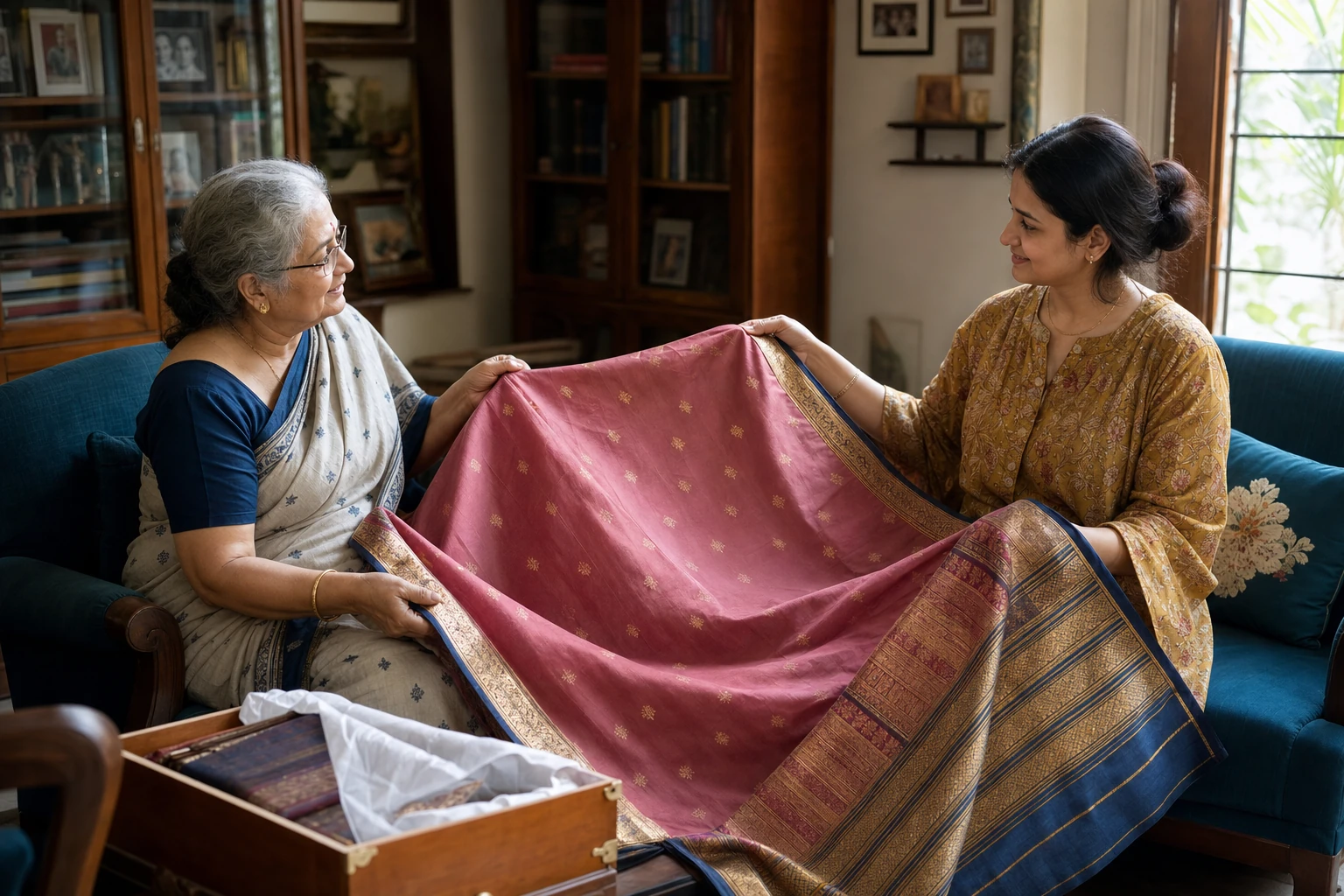
The gift then becomes more than cloth. It becomes an invitation to continue the story without erasing what came before. That is how an anchol travels from one life into another.
Does a saree need to be expensive to become an heirloom?
No. Emotional association, documented history, repeated use and family meaning can matter far more than purchase price.
Should a fragile heirloom saree still be worn?
Assess its condition first; weak folds, damaged ornament or delicate cloth may require textile-conservation advice.