Neem Leaves, Starch and Sandalwood: The Ritual of Storing Sarees
নিমপাতা, মাড় আর চন্দন: শাড়ি তুলে রাখার ঘরোয়া রীতি
A Bengali household view of saree storage rituals—airing, clean folds, breathable wrapping, neem, and regular inspection as care and remembrance.
Storage as a household rhythm
The familiar scent of a saree cupboard rarely comes from one thing. It is a mixture of clean cloth, old wood or steel, a preferred soap, perhaps sandalwood, and the passing of many seasons. In earlier households, storing sarees belonged to a larger domestic rhythm: air the silks, refold the cottons, inspect the edges, and return everything to its place.
That rhythm still matters. A saree may spend far more time folded than worn, so good storage is one of the most important forms of textile care.
Begin with a completely dry saree
Never put away cloth that is damp from wear, steam or humidity. Moisture trapped inside folds can encourage odour, staining or damage. After wearing, allow the saree to air in shade before returning it to the cupboard.
Check the care label or seller's guidance before cleaning. Fibre, dye, embellishment and construction can require different treatment. When the material is uncertain or the saree is valuable, professional textile advice is safer than a confident home remedy.
Give the folds room to breathe
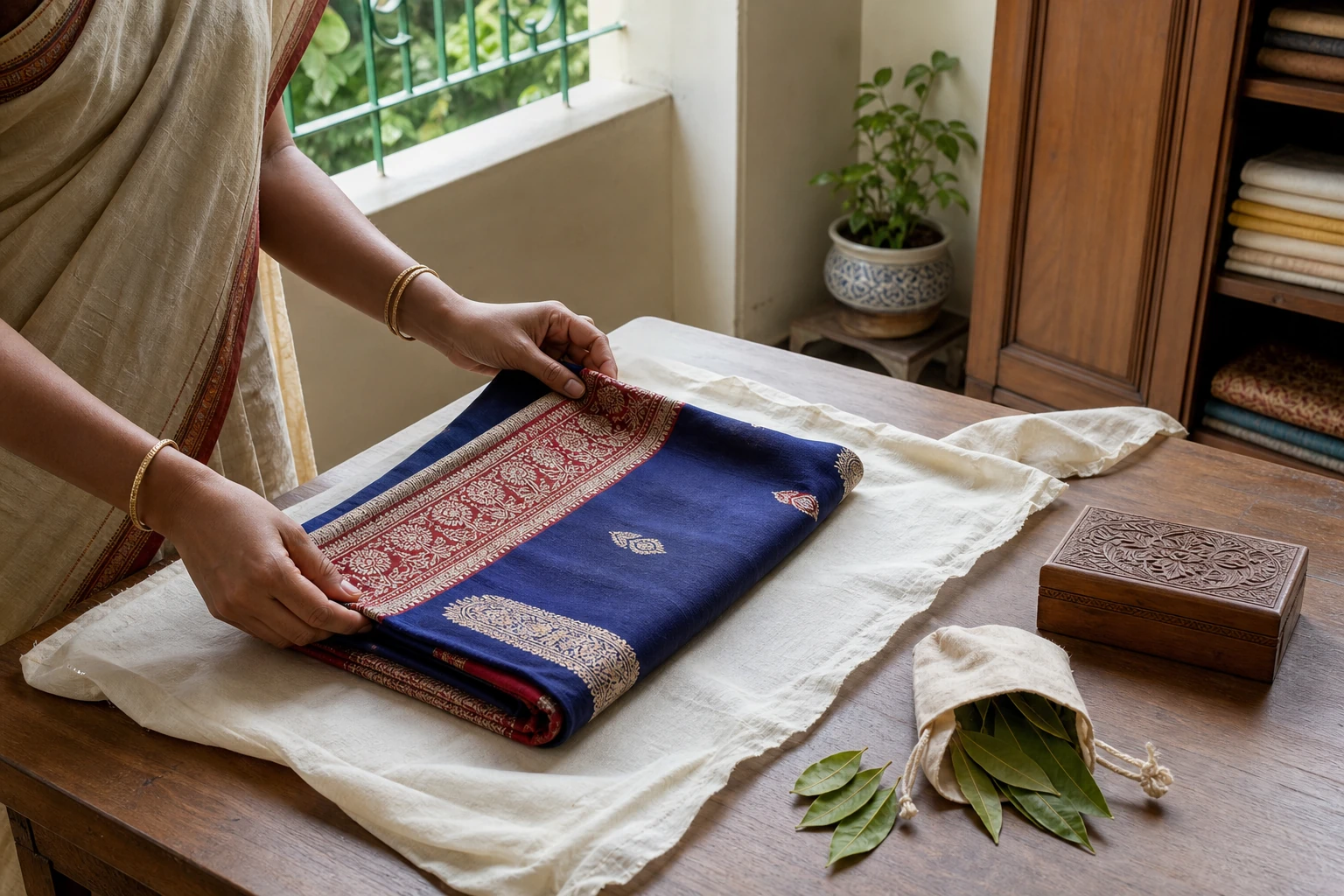
Use clean, breathable wrapping such as uncoloured cotton or acid-free tissue where appropriate. Avoid printed newspaper, strongly dyed paper and plastic that may trap moisture. Do not pack heavy sarees so tightly that borders or raised work remain sharply crushed.
Change the main fold lines periodically. Repeated pressure along the same crease can weaken cloth over time, especially where ornament is dense. A seasonal reminder is enough to make refolding a habit.
Use tradition thoughtfully
Many families place dried neem leaves or other familiar materials between stacks. These practices carry cultural memory, but any botanical material must be fully dry, kept from direct contact with delicate fabric and replaced if it shows moisture or decay.
The safest routine is simple: a clean cupboard, dry fabric, breathable separation and regular inspection. Care is not about making an old textile look untouched; it is about helping it age without losing the details that make it itself.
How often should stored sarees be checked?
A seasonal inspection is a useful routine, while humid conditions or delicate embellishment may require more frequent checks.
Should sarees be kept in plastic covers?
Non-breathable plastic can trap moisture during long-term storage, so use clean breathable protection unless specialist textile guidance says otherwise.