Saree Length and Width Guide: What the Measurements Really Mean
শাড়ির দৈর্ঘ্য ও প্রস্থ: মাপ বোঝার সহজ পাঠ
Understand common saree length and width ranges, drape proportions, and which measurements to confirm before buying.
The common main-drape length
Many contemporary sarees provide about 5.5 metres for the main drape. That is a useful reference, not a universal law. Regional styles, older formats and nine-yard drapes use different lengths.
A product page should clearly state the wearable saree length and width, with units, rather than relying only on a standard-size label.
Why stated lengths can vary
Some listings state the full textile length while others state only the main wearable drape. Regional formats and finishing choices can also change the measurement.
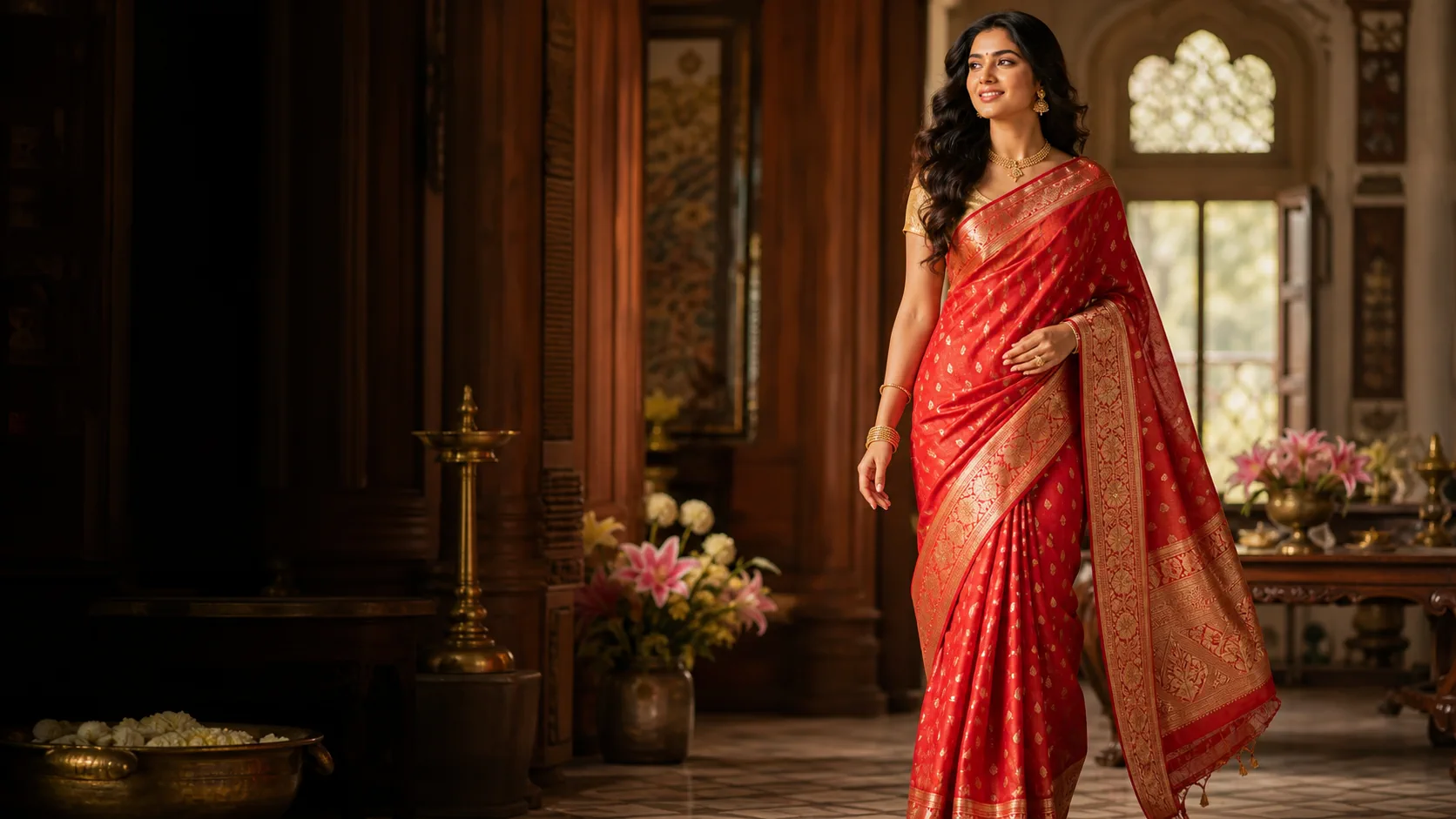
Never estimate the textile length from a model image. Styling, drape depth and camera framing can make the same measurement appear different.
A practical width range
A common width is roughly 1.12 to 1.22 metres, or 44 to 48 inches. Width affects hem length, tucking and how much cloth travels from waist to floor.
Height, footwear and preferred drape all matter. If you need extra floor length or use a style with deeper tucks, ask for the actual measured width rather than relying on 'standard size'.
Measurements to request
Ask for wearable length, total stated length, width and whether tassels or finishing are included in the measurement. For vintage or hand-finished pieces, request measurements at more than one point if edges appear uneven.
Record units clearly and avoid mixing metres, yards and inches without conversion. Precise measurements prevent returns and make unusual regional formats easier to explain.
Is every saree exactly 5.5 metres long?
No. About 5.5 metres is common for a main drape, but regional styles and regional formats can change the total length.
What length should a saree listing state?
A listing should state the wearable length and width clearly, including units and any relevant finishing details.