The Saree Almirah: Where a Family Keeps Its Memories
শাড়ির আলমারি: যেখানে পরিবারের স্মৃতি থাকে
Discover how saree memories gather inside a family almirah, holding everyday rituals, celebrations and the quiet presence of generations.
A cupboard that is more than storage
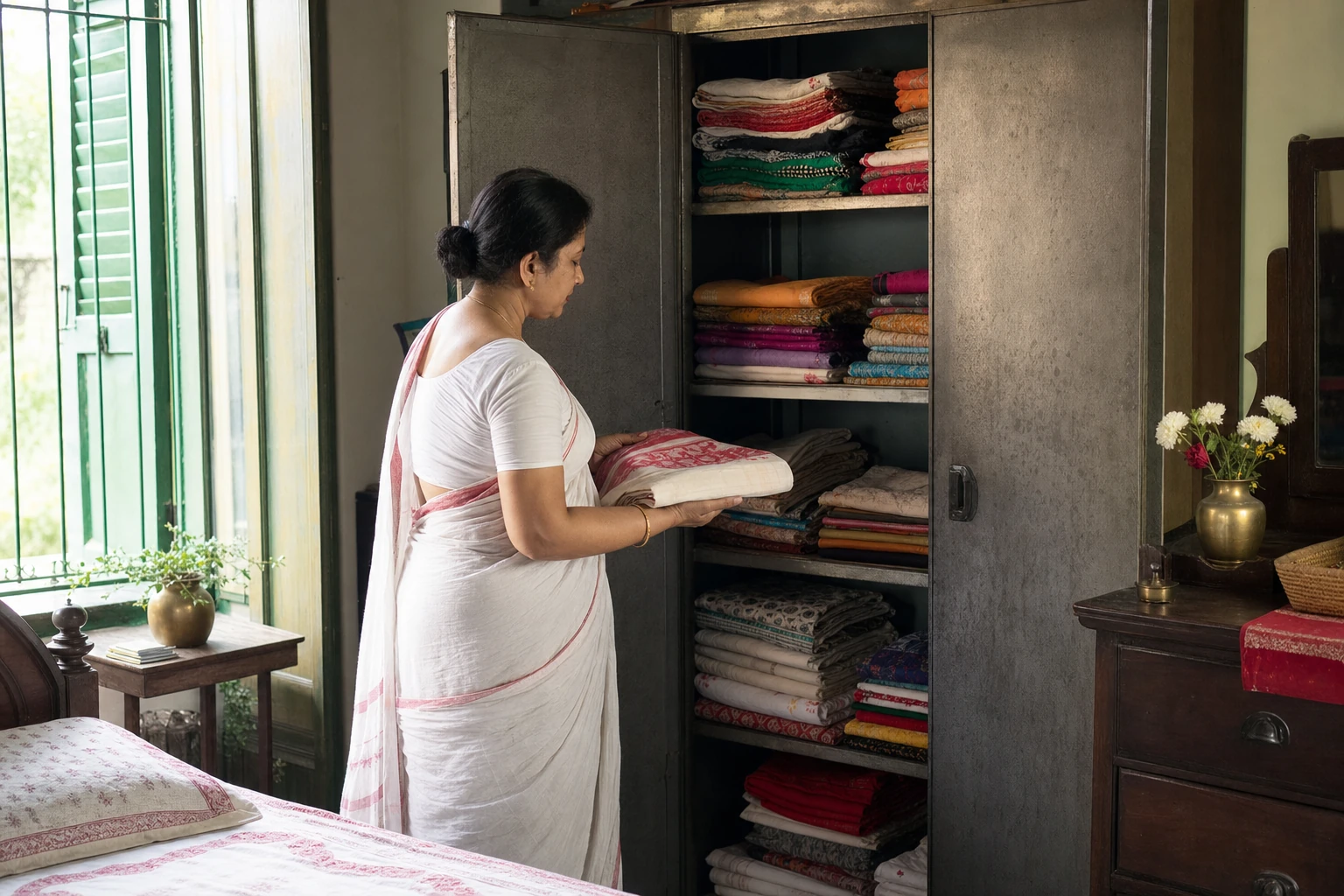
In many Bengali homes, the saree almirah is opened with a small ritual. A key turns, metal doors release with a familiar sound, and carefully folded stacks appear: cottons for ordinary mornings, silks for invitations, a white saree kept for puja, and one or two pieces that are rarely worn but never given away.
From the outside, it is simply storage. Inside, it is a private family archive. A faded border can bring back a grandmother's verandah, while a repaired edge can recall the person who believed that good cloth deserved another life.
Why cloth remembers so well
A photograph records one visible instant. A saree gathers many. It moves through kitchens, train journeys, ceremonies, office corridors and long conversations. It is touched, washed and folded along lines that become softer with time. Its memory is physical.
The most meaningful saree in a family is not always the most expensive. A simple cotton drape may carry more emotional weight than a formal silk because it belonged to ordinary life and was present often enough to become part of how a person is remembered.
Reading the folds
Look closely at an inherited saree before deciding that it is too old to keep. Wear marks can suggest how it was draped. A hand-sewn repair shows where someone chose preservation over replacement. An old shop label may lead to a market that no longer exists.
Write these details down. Ask older relatives when the saree was bought, who wore it and on which occasions. Store the note with the saree. A few truthful sentences can stop a family story from disappearing.
Wearing memory forward
An heirloom does not need to remain untouched. It can be worn gently, restyled with a simple blouse or photographed in full before fragile areas worsen. Sometimes the best way to honour a saree is to let it enter another person's life.
Every anchol begins with cloth and becomes complete through use. The next time you open a saree cupboard, pause before choosing what to wear. You may be standing in front of your family's most intimate history.
Why can an ordinary old saree feel so important?
Its value can come from repeated use, association and family memory rather than price or formal rarity.
How can I preserve the story of an inherited saree?
Record the owner's name, approximate date, known occasions, visible repairs and remembered stories beside clear photographs.