How to Read Saree Product Photos Before Buying Online
অনলাইনে শাড়ির ছবি বুঝে কেনার উপায়
Learn what to inspect in saree product photos: full drape, pallu, border, motifs, blouse piece, scale, colour and model styling.
Start with the full saree view
Product photographs cannot replace touch, but they can answer many useful questions when you know what to examine. The key is to treat the gallery as evidence, not decoration.
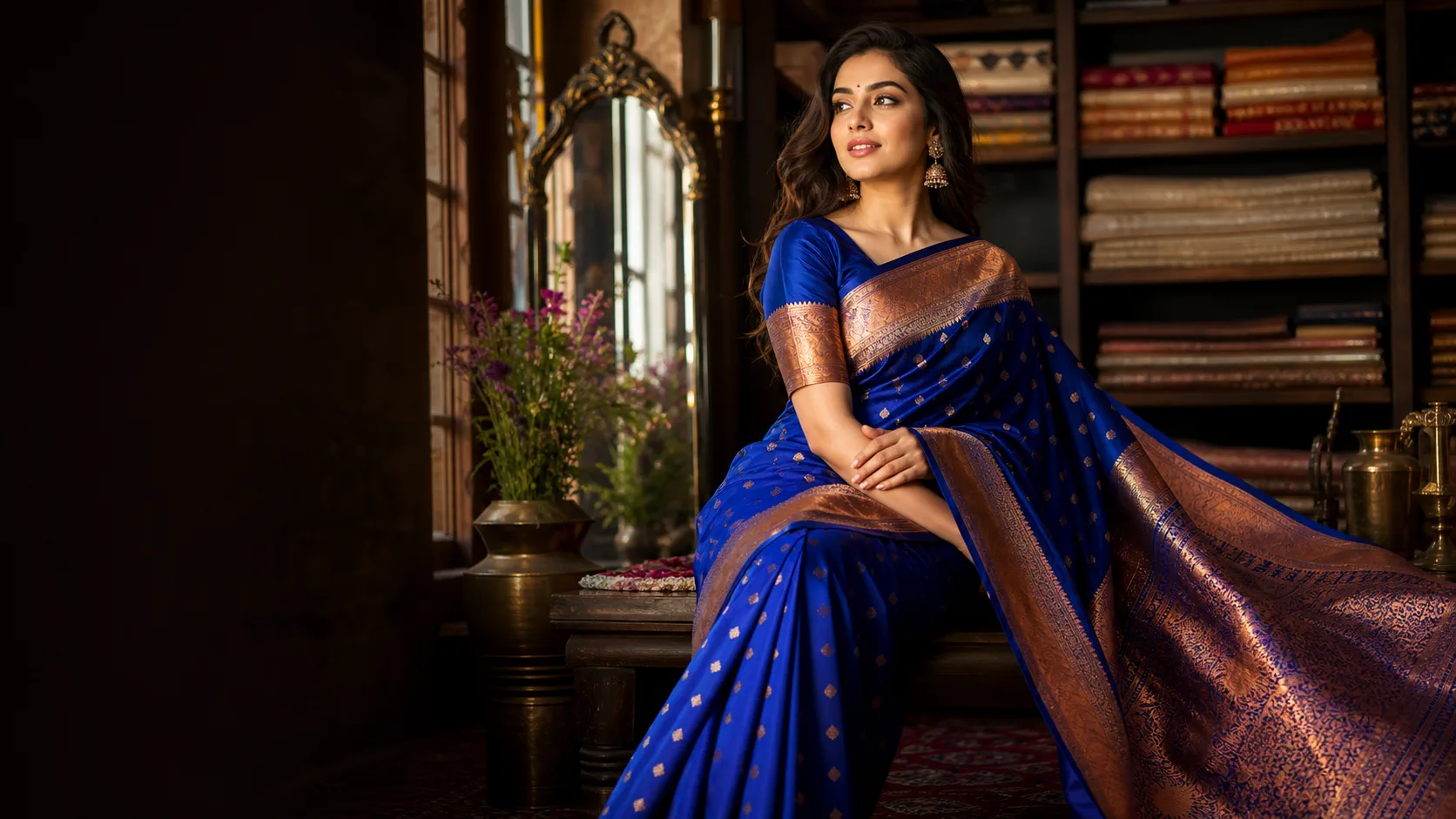
A full-length photograph shows the relationship between body, border and pallu. Notice how large the motifs appear in proportion to the wearer and how much visual weight sits near the hem.
Remember that model height, pleat width and camera angle affect scale. Use written measurements when available rather than estimating length from a styled image.
Find the pallu photograph
The pallu may contain the saree’s most intricate design. Look for a photograph where it is spread or clearly displayed. Check motif direction, density, colour changes and whether the design continues across the full width.
Inspect the border closely
Border close-ups reveal detail that disappears in a full-length view. Check width, pattern repetition and contrast against the body. A wide border creates a different silhouette from a narrow one and may influence how you plan the blouse.
Look at the fabric surface
Close photographs may show texture, sheen and weave-like detail, but they cannot prove fibre content. Use the written material description for composition. Photography is best used to understand visual surface and design placement.
Separate the saree from the styling
Models may wear blouses, jewellery, footwear or accessories that are not included. Read the listing to learn exactly what comes with the product. The model image is inspiration; the inclusion list is the purchase information.
Compare photographs for colour consistency
If the saree appears dramatically different across images, lighting may be influencing it. The written colour description can help. When exact coordination matters, ask for clarification before buying.
Check the blouse-piece information
A separate blouse-piece photograph is useful, but it should be supported by text confirming whether a piece is included and describing its colour or design. Do not infer inclusion from an image alone.
Watch for repeated or incomplete views
A strong gallery should help you understand different parts of the saree. If every image shows nearly the same angle and the pallu or border remains hidden, you may not have enough information for a confident decision.
Use video thoughtfully
Video can show movement and drape, but colour may still shift due to lighting and editing. Pause on details and compare them with static product photographs and the written description.
Make a final evidence check
Before checkout, confirm that you have seen:
The overall drape; The body motif or surface; The border; The pallu; Any included blouse piece; The written colour and material description
Explore the Anchol Katha saree gallery and open each product page before choosing—the story lives in the details.
Can photographs confirm that a saree is pure silk?
No. Photographs can show appearance but not verify fibre composition. Rely on accurate product information and relevant documentation.
Is the model’s blouse included with the saree?
Not necessarily. Check the product description and inclusion details rather than assuming styled items are supplied.
Why does the border look wider in one photograph?
Camera angle, cropping, draping and model proportions can change how it appears. Look for a flat or close-up view and any stated measurements.