Fingerprints in the Cloth: Understanding Handloom Irregularities
বুননের আঙুলছাপ: হাতের কাজের স্বাভাবিক বৈচিত্র্য
Learn how to assess handloom irregularities, yarn slubs and spacing changes without treating every variation as either a flaw or proof.
Perfection can hide the process
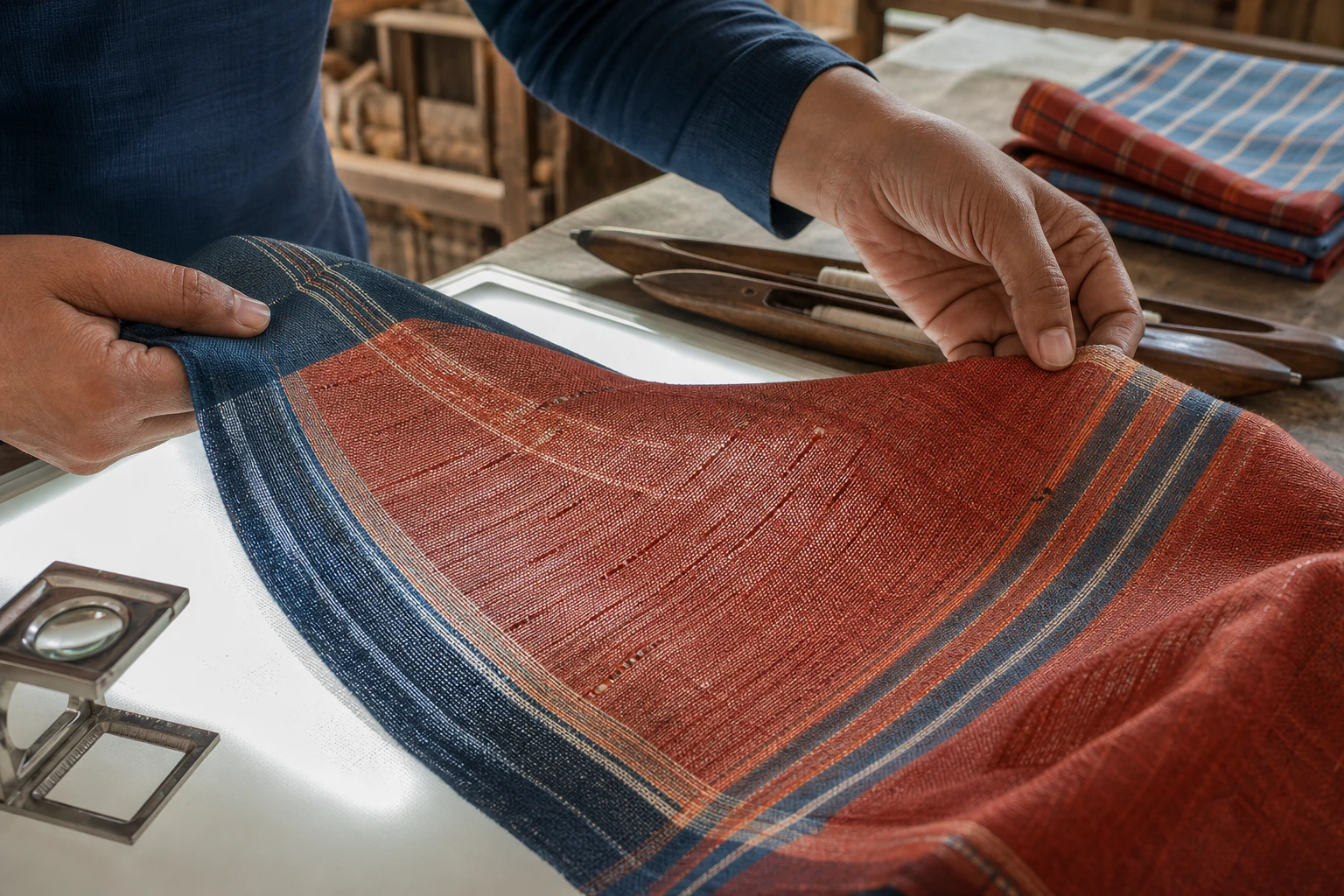
Machine consistency has trained many buyers to expect every line, motif and edge to repeat without visible variation. Hand processes can create a different surface: a slight change in spacing, a small slub, or an unevenness that becomes visible only in certain light.
Such details can give cloth character. They can also raise legitimate questions about durability or finish. The useful response is neither rejection nor romanticisation. It is careful inspection.
Variation is not automatic proof
A common claim says that any irregularity proves a saree is handloom. That is too simple. Variation can arise through yarn character, handling, finishing, wear or production problems. Highly skilled handwork may also appear remarkably regular.
Authentication depends on construction knowledge and provenance, not a single visual sign. Ask the seller what is documented and which description is based only on appearance.
Inspect function as well as beauty
Look at whether the variation interrupts the structure, weakens an edge or creates a hole. Compare it with the surrounding repeat. A harmless shift in motif spacing is different from broken threads that may worsen during wear.
Product photographs should include close-ups and full views. Close-ups reveal surface character; full views show proportion and repetition. Neither is enough alone.
Honest listings build confidence
A seller should disclose visible irregularities that materially affect the product. The description can explain what is seen without making unsupported claims about method or origin. Clear photographs let the customer decide whether the detail feels lively, neutral or unsuitable.
This approach protects both craft and buyer. It respects hand production without using it to excuse every issue.
Learning to look slowly
The habit of close looking changes how we shop. Instead of asking only whether a saree is flawless, we ask how it was represented, whether the visible details are stable, and whether the seller has separated evidence from story.
Cloth carries traces of process. Reading those traces responsibly is one way to honour the maker and choose with confidence.
Is a slub always a defect?
No. A slub may be part of yarn character or an intended surface, but its effect on strength and appearance needs context.
Can photographs authenticate handloom?
Photographs can support inspection but usually cannot establish production method without provenance and textile knowledge.